The bitter debate going on in Washington is really nothing new for health care since the opposing parties have very different views on how care should be delivered in the United States. We are unique in the world since we have an employer-based system that dates back to World War II when wages were frozen but employee benefits were not, so today if you have a job there is a good chance that you have some health insurance. Somewhere around 160 million of us get our health insurance from employer-based or individual private insurers.
Government, public insurance, is another important source of coverage with Medicare and Medicaid providing benefits to some 100 million children, elderly and poor. This leaves about 50 million without private or public provided health insurance, namely the uninsured.
When you consider that we spend more than any other country in the world in absolute dollars and per capita but fail to insure 50 million, you naturally ask the question- Why is this so?
The simple answer is that health care in America is very expensive and grows at a far faster rate than almost every other product or service we buy. This fact underlies the escalating costs of health insurance premiums and makes it increasingly unaffordable for many low wage individuals, small firms, and of course the poor who are not poor enough to qualify for a public program like Medicaid.
The debate of how to address this problem is between social conservatives who argue that the employer-based system is best versus social liberals who support a stronger role for government. Conservatives blanche at more government and point to the shaky solvency of Medicare and the financial stress that Medicaid places on states and local governments. Liberals portray the current system as lacking basic fairness as the uninsured are forced to seek care in hospital emergency departments or denied needed care altogether. Conservatives seek ‘market solutions’ whereas liberals rely of government support.
What is the role of government? We could probably get wide agreement that we need public support for the disabled, aged and the poor. However defining who is poor is where a line must be drawn. The new reform law crafted primarily by social liberals provides support by extending Medicaid income eligibility and providing subsidies to lower wage earners in the coming exchanges. Conservatives blast these provisions as overreaching and financially irresponsible.
All this wrangling is about how to make health insurance affordable but little is being said about how to address the underlying problem-- the excessive cost of health care in America. Isn’t it time that we stopped relying on politicians for solutions and instead took some personal responsibility? Why don’t we individually declare a war on obesity? Think of this. Nearly one-third of children ages 10–17 and U.S. adults were overweight or obese in 2007. And with the strong association between obesity and many chronic diseases, including type 2 diabetes, cardiovascular disease, several types of cancer, musculoskeletal disorders, sleep apnea, and gallbladder disease- isn’t it smart to shed some pounds? A slimmer nation will be healthier and less costly to care for. Let’s make it happen- THIN IS IN!
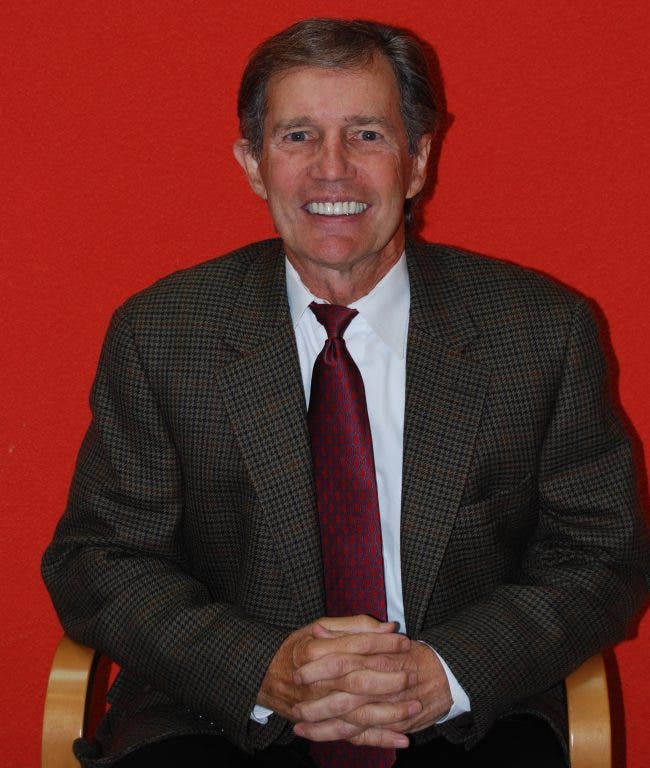
John Sardelis is an Associate Professor of Health Administration at 's Long Island campus in Patchogue.
Patchogue Patch encourages our readers, writers, political officials and anyone in the Patchogue-Medford area to submit their personal views on current events and issues as articles for our Opinion section. Articles submitted should not exceed 500 words, and all submissions will be considered. Please note that these pieces are not necessarily representative of the opinions of Patchogue Patch and represent that of the author. Submissions should be sent via email to michael@patch.com
Also, back in the 80's, you would go to a doctor and pay the bill at that moment. You would then send the bill to your health care provider and be reimbursed an amount. That procedure would make you think twice before you called for an appointment. Today, with low co pays, many people sneeze and make an appointment. We overburden the system. These are just two aspects of a system that is out of control.
The high cost of health care in the US is not an issue of patient misuse, but rather the paperwork costs I mentioned combined w/ mismanagement in hospitals and extraordinary amounts paid for end-of-life care. Atul Gatawande has written several insightful articles about this problem: http://www.newyorker.com/reporting/2011/01/24/110124fa_fact_gawande And another: http://www.newyorker.com/online/blogs/newsdesk/2010/12/the-cost-conundrum.html
Getting the United States hooked on food that makes them sick with indigestion, irritable bowel syndrome, colitis, ulcers, heart disease, high cholesterol, high triglycerides, depression, anemia, cancer, etc, etc, etc is an extremely lucrative business. Kinda like big tobacco. Health insurance is the biggest racket going and until the politicians and pharmaceutical companies and doctors who poison us all admit it the pigs in congress will continue to chase their FAT tails to make it look like they give a shit while their lobbyists make sure that no one in this country ever figures out what the real problem is: THE USDA FOOD PYRAMID.
For example, I know 2 young ladies (one 33years old and one 26 years old) both have type 1 diabetes. The 33 year old has had this disease since she was 22 months old, her insurance covered an insulin pump and she is doing well controling her diabetes. The 26 year old has had diabetes for only 2 years but her insurance company does not cover the insulin pump...she is having problems controling her diabetes and will have complications that will cost a lot more money than an insulin pump to control. The kicker here is both young ladies are covered through Local 338 RWDSU a huge opponent of Wal Mart and a big supporter of Obama care...this union is taking the money of the part time workers and not giving them the basic medical care that they pay union dues for. Greed of the insurance companies, labor unions, large corporations and finally medical providers have driven the cost of health care through the roof. CORRECT...going after the cost of medical care and insurance is a must...competition drives down prices, why not here? Because the insurance companies set the price not the providers...the system needs to be controled but not taken over by the government.
Thinking about the government to step in and control the cost of health care would be a great idea. Maybe instead of cuts to education maybe we should have cuts to governmental spending on first maybe their own health care policies. My father has Medicare and a supplemental insurance he pays for out of packet. That is over $2000.00 a year extra the cost of policy. A man 85 years old who thought he who live the good life after retiring at 65 has more expenses now than younger. Who is lowering his bills? I think we as the voice of the future should step in and let government know how we feel. If not we will be in worse shoes than my father when and if we reach his age.
Not all health care expenses are caused by poor lifestyle decisons. My husband and I are in our early 60's; we lead active lives, make wise dietary choices and are healthier than most 30year olds. We pay high premiums and never make claims outside of routine yearly visits. My husband broke his wrist last spring, an event that could not have been "prevented", so far his care has cost us over $6,ooo in deductibles and "co-insurances", and the preponderance of paperwork generated by this relatively minor operation has been onerous. i pity those who are dealing with the crushing emotional burden of serious illness couples with the inefficiency and obfuscation evinced by insurance companies like ours.
A true change in healthcare; costs and quality will not change with laws created in Washington. I t will only change when we the American people start making changes in our lifestyle, within our own families and in our own school districts. American families need to be responsible for their own lifestyle choices and realize that health care begins at home. The parents and caregivers need to set the example for children from a very young age. Families must become more educated in areas of nutrition, exercise, holistic medicine, medications, personal hygiene etc. We must become more proactive in our choices and work with the local school districts to make a healthy lifestyle part of the education curriculum starting in nursery school.